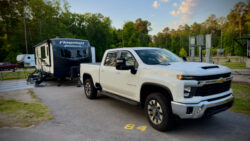
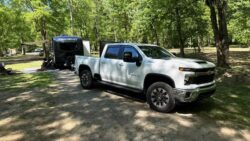
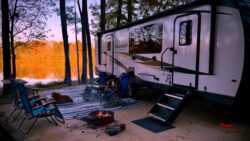
Took off Labor Day weekend and rode up the NC Smokies to camp. Trip report here.

|
|
||
|
Took off Labor Day weekend and rode up the NC Smokies to camp. Trip report here.
and is coming to a town near you. The Yamaha site confirms the Super Tenere will in fact be sold in the US with an early 2012 release in 2011.
Yamaha has wisely chosen to import its flagship adventure touring motorcycle, the Super Tenere, to the U.S. in mid-2011 as the early-release 2012 model. The Super Tenere is a street bike designed to fuse the touring and off-road worlds, giving motorcyclists a machine that can go virtually anywhere and do anything. Powering this do-it-all machine is a fuel-injected and liquid-cooled 1199cc Parallel Twin, a configuration Yamaha chose specifically due to its compact size. Each piston slides within a cylinder that has a bore and stroke measuring 98.0 x 79.5mm and compresses fuel to a ratio of 12.0:1. The engine’s firing order has been set so both of the cylinders fire closely together so the powerband mimics that of a large single-cylinder engine, which they claim enhances power delivery to the ground. A two-axis primary counter-balancer mitigates unwanted engine vibration. The engine wears an eight-valve cylinder head with dual overhead camshafts operating the valvetrain. Similar to its sportbike line, the Tenere employs Yamaha’s Chip Controlled Throttle (YCC-T) ride-by-wire system as well as the D-Mode, a toggle on the handlebar which allows riders to switch between two engine maps based on road conditions or riding preference. More technology comes in the form of a three-way adjustable traction control system. Engine power is transferred through a manual cable-actuated clutch; 6-speed transmission and shaft final drive, which was chosen for its all-around durability and relatively-low maintenance. The main frame is comprised of a steel backbone that uses the engine as stressed-member of the chassis for better handling. Making up the rest of the chassis is an aluminum swingarm and subframe, 43mm inverted fork and hydraulic shock absorber. Both ends provide 7.5-inches of suspension travel and offer adjustability in the form of compression and rebound for the fork and spring preload (hand adjustable, without tools) and rebound on the shock. An aluminum skid plate is also fitted to protect the bottom of the motorcycle from hard impacts. In terms of ergonomics, the Super Tenere employs a standard-style handlebar and the seat can be set in two different positions; a low height of 33.26 inches or the standard height of 34.25 inches. It also comes with a windshield and plastic hand guards. A relatively large 6-gallon fuel tank complements the set-up and will no doubt make for amble range between fill-ups. It rolls on a set of spoked wheels fitted with tubeless Bridgestone Battle Wing tires. Front and rear hydraulically-operated disc brakes incorporate both ABS and a linked brake feature in which the rear brake is activated automatically when the front brake is engaged. However, when the rear brake is manually actuated it can be controlled independently of the front. Like the rest of Yamaha’s line-up, a variety of accessories are available, including a full set of hard luggage options that have been fully integrated into the design of the bike. This will be limited-run machine. And to purchase one you will need to pre-order it from your Yamaha dealer between September 2010 and March 2011 at a retail price will be $13,900. Once April 1st rolls around you will have missed the boat, so don’t procrastinate as this bike is sure to live up to the hype. If you are lucky enough to get one of the production run, your bike will then be delivered sometime in May of 2011.Alrighty then. HDT M1030-M2 670cc JP8 is the name. This here’s the HDT M1030-M2 670cc JP8, but don’t let the charming name deceive you, this military-grade motorcycle is as tough as old boots. Boasting a (patent pending) “heavy fuel” engine capable of running on Diesel, Biofuel, Aviation fuel and four other military grades of petroleum, it can traverse water 2ft deep and has a tank range of over 300 miles. Its single, four-stroke cylinder will reach 95mph in the heat of combat, and at 33bhp it’s even suitable for restricted licence holders. Despite a price tag of $18,500 there’s already a significant waiting list of survivalists, mercenaries and prospectors hoping to get their hands on its high tensile steel frame. Hayes Diversified Technologies Inc. claim the M1030 is a “breakthrough in military ground vehicle technology”, one that comes decorated in Desert Tan, Military Green or Black.Read all about it here.
I am currently following a ride report over at Advrider starring a 5 Indonesian motorcycle riders and a load of 4X4's attempting to traverse the Island of Borneo (3rd largest island on the planet), and doing it along Equator. I have to say I am breaking a sweat just reading this and looking at the pictures. This is by far the gnarliest stuff I have ever seen attempted on motorcycles. So head over to advrider.com to take part of the fun.
The number of motorcyclist crash-related fatalities has more than doubled during the past 10 years. In the Safe, Accountable, Flexible, Efficient Transportation Equity Act: A Legacy for Users (SAFETEA-LU) P.L. 109-59, Congress directed the Secretary of Transportation to conduct a comprehensive study of the causes of motorcycle crashes. The National Highway Traffic Safety Administration (NHTSA) has published the results from the pilot study that tested methodologies to be used in a more in-depth investigation into motorcycle crashes, the American Motorcyclist Association (AMA) reports. The larger study is now under way at the Oklahoma Transportation Center, a well-respected research facility, under the supervision of Oklahoma State University (OSU). "The AMA has long advocated for, and supported, a new federal study into the causes of motorcycle crashes and motorcyclist fatalities, particularly in light of evolving demographics and changing technology," said AMA Senior Vice President for Government Relations Ed Moreland. "A comprehensive motorcycle crash study is long overdue, and this pilot study is the first step to making sure we collect the data necessary and employ the proper procedures to learn lessons that will save lives." The current report does not focus on crash data from the scaled-down pilot investigation, but rather the investigative procedures that are crucial to the integrity of the OSU study. "Motorcycle Crash Causes and Outcomes: Pilot Study" describes the processes investigators used to collect crash data, the type of data collected and offers recommendations for a larger motorcycle crash study that's partially funded by a $100,000 grant from the AMA. The motorcycle crash pilot study can be downloaded here. This publication is distributed by the U.S. Department of Transportation, National Highway Traffic Safety Administration, in the interest of information exchange. In 2005, Congress approved the Safe, Accountable, Flexible, Efficient Transportation Equity Act: A Legacy for Users, and the legislation called for the study. Lawmakers pledged $2.8 million for the research, and asked the motorcycling community to pitch in. In 2007, the AMA committed $100,000, and AMA members contributed an additional $27,000 through the AMA Fuel the Fund campaign. Since then, six state safety programs — New York, Ohio, Oklahoma, Rhode Island, Texas and Wisconsin — have pledged another $560,000. Westat, based in Rockville, Md., and Dynamic Science Inc., based in Anaheim, Calif., conducted the pilot study for the federal government. Over a three-month data-collection period, investigators worked with five police agencies in seven jurisdictions. Notifications were received on 53 motorcycle crashes, of which 23 cases were completed. Investigators concluded that data collection is the most-challenging aspect of such a study and offer suggestions to improve that process. The pilot study reports that the average cost per completed case is $7,500, which includes a margin for dropped cases. However, this figure includes data collection only and does not include overhead costs of forms, manuals, other equipment and back-office support. The last major motorcycle crash causation study, commonly called the "Hurt Report" in reference to its lead researcher, the late professor Hugh H. "Harry" Hurt, was completed in 1980. The Hurt Report provided a wealth of data that has been used to develop training and strategies to help keep riders safer on the road. In the decades since, the traffic environment has changed enormously, prompting the AMA to begin campaigning for a new study several years ago. Speculation is growing in Europe that Triumph will announce a smaller displacement Tiger to go along with its 1050cc model later this year. Expected to be another three cylinder machine, the motive force would likely be based on the Daytona 675 powerplant. The expectation is that it would displace 800cc, however, to compete more directly with BMW’s popular F 800 GS. If the Daytona 675 engine can indeed be bored and stroked to 800cc (if any of our readers know, drop us an email), expect Triumph to try and undercut the claimed wet weight of the F 800 GS, which is 455lbs (putting dry weight in the neighborhood of 400 pounds). Triumph has already announced it will be rolling out several new models shortly, and a lower displacement Tiger is logically one of those. This will be interesting.
The BMW K 1600 GT and K 1600 GTL The 6-cylinder BMW motorcycle engine was first presented in the concept study of the Concept 6 and it captured the imagination of many motorcycle fans. Six-cylinder in-line engines have stood for fascinating engine technology in BMW automobiles for over seven decades in a way which is unique among brands. In the near future, BMW motorcycles will also be available with an internally developed six-cylinder in-line engine, according to the company. BMW released preliminary information on the new BMW K 1600 GT and the BMW K 1600 GTL, which will feature the 6-cylinder engine and more new BMW technology. Take a peek. Interesting stuff.
The Natchez Trace Parkway is established to commemorate the historical significance of the Old Natchez Trace. Originally a primitive trail that stretched 500 miles through the wilderness from Natchez, Mississippi, to Nashville, Tennessee, throughout the years it has gained a rich history that continues to fascinate visitors who travel in the footsteps of those who've gone before. History has witnessed several phases in the development of the Natchez Trace, each with a distinct origin and purpose. Residents of Fort Nashborough in Tennessee (a city now known as 'Nashville') named the first part of the trail Chickasaw Trace because it led to the lands of the Chickasaw Nation. The trails heading southwest were controlled by the Choctaw Nation and then led onward toward Natchez. Eighteenth-century British maps labeled the trail as the "Path to the Choctaw Nation." Discover the history of the Indian tribe that once resided there at several places along the trail, such as Buzzard Roost in Alabama, which tells the story of the Chickasaw chief Levi Colbert, or the Chickasaw Village in Mississippi, which shows of the life of the Chickasaw Indians. Visitors can go to what was once the center of activities for the now-extinct Natchez Indians, or visit Mississippi's Emerald Mound, one of the largest ceremonial mounds in the United States. Finally, no trip is complete without visiting sites on the Trail of Tears Historic Trail (which runs through several states, including Alabama and Tennessee), where in 1838 the United States government forced more than 16,000 Cherokee Indian people from their homelands and sent them to Indian Territory.
The South has many places with stories about the Civil War and the battlefields along the way. The Natchez Trace Parkway is no exception. Be sure to stop by Shiloh National Military Park near Savannah, Tennessee, which was the site of a two-day battle involving 65,000 Union and 44,000 Confederate troops. The Stones River National Battlefield near Nashville, Tennessee provided a decisive moral boost for Union troops. The Tupelo National Battlefield in Mississippi is a one-acre site that commemorates the last major Civil War battle in Mississippi. There the Union Army utilized their USCT's (United States Colored Troops) to engage in battle. Pay your respects to those who lost their lives in battle at the memorials at Brice's Cross Roads National Battlefield Site north of Tupelo, Mississippi, and Vicksburg National Military Park in Vicksburg, Mississippi. Vicksburg contains museums, monuments, and many artifacts, so be sure to spend some time perusing the local historical attractions. After Andrew Jackson's victory at the Battle of New Orleans in 1815, he marched his troops home along the path — an event that signaled not only the war's end, but also the decline of the importance of the road as a transportation corridor. In the years following 1820, this road was finally referred to as the "Natchez Trace." We'll probably ride this trail in October 2010. Hopefully we will be able to hit the right time for the fall colors. when I grow up. Tim Cotterill’s Rocket II is one hell of a cool trike. A 1000HP supercharged Hemi V8, but other specs aren’t available. Oh well. I can only dream……
Passengers are usually at the mercy of the rider's good sense, or With that, here are my suggestions for passengers: Wear Good Gear As a passenger, you are just as vulnerable as the rider. If the rider Mounting/Dismounting Don't get on or off the bike unless the rider says they are ready. How to Sit on the Bike As a passenger, sit on the seat, with your feet on the passenger pegs. A motorcycle is a dynamic machine. It makes its way by maintaining Acceleration When the rider accelerates away from a stop, lean forward slightly to Braking Everyone has to slow down sometime. When the rider applies the Bikes lean. It's what makes them so much fun. When the bike is Stopping As the passenger: when the bike comes to stop, sit still. Keep your Communication Talk to your rider, before, during and after the ride. Let them know If you need to communicate with your rider during the ride, understand Take responsibility for your ride. Communicate with the rider. Make |
||
|
Copyright © 2010 Lois and Tors Motorcycle Weblog - All Rights Reserved |
||